Introduction
When most people think about lung cancer, they immediately associate it with smoking. While tobacco use remains the leading cause of lung cancer worldwide, a significant number of people diagnosed with lung cancer have never smoked. In fact, lung cancer in never-smokers is now recognized as a distinct public health concern with its own pattern of risk factors, genetic characteristics, and clinical presentation.
According to the Centers for Disease Control and Prevention (CDC), although cigarette smoking causes the majority of lung cancer cases, many people diagnosed each year have never used tobacco. Researchers continue to investigate environmental, occupational, and genetic factors that contribute to lung cancer among never-smokers. [1]
If lung cancer occurring in people who have never smoked were considered a separate disease, it would rank among the leading causes of cancer-related deaths worldwide. This highlights the importance of recognizing that lung cancer is not exclusively a smoker’s disease.
Environmental exposures, inherited genetic factors, family history, occupational hazards, previous radiation exposure, and chronic lung diseases can all contribute to the development of lung cancer in individuals who have never smoked. Understanding these risks can help people make informed decisions about their lung health and encourage earlier medical evaluation when symptoms arise.
Can Non-Smokers Really Get Lung Cancer?
The simple answer is yes. Anyone with lungs can develop lung cancer, regardless of whether they have ever smoked.
According to the National Cancer Institute (NCI), approximately 10% to 20% of lung cancer cases occur in people who have never smoked. Researchers have also found that lung cancer in never-smokers often differs biologically from smoking-related lung cancer, with different genetic mutations, risk factors, and responses to treatment. [2]
Lung cancer in non-smokers can affect:
- Men and women.
- Younger adults as well as older adults.
- Healthy and physically active individuals.
- People with no obvious symptoms during the early stages.
- Individuals with no history of tobacco use.
Because many non-smokers assume they are not at risk, symptoms may initially be overlooked or attributed to less serious respiratory conditions, potentially delaying diagnosis.
Why Lung Cancer in Non-Smokers Is Often Missed
One of the greatest challenges in diagnosing lung cancer among non-smokers is that the early symptoms are often subtle and resemble those of much more common illnesses.
Symptoms such as a persistent cough, shortness of breath, chest discomfort, fatigue, or recurrent respiratory infections may initially be mistaken for:
- Seasonal allergies.
- Asthma.
- Bronchitis.
- Pneumonia.
- Acid reflux.
- Viral respiratory infections.
Because lung cancer is often perceived as a disease that primarily affects smokers, both patients and healthcare providers may initially consider more common explanations before investigating for cancer. As a result, diagnosis may sometimes occur at a more advanced stage.
Recognizing persistent or unexplained respiratory symptoms and discussing them with a healthcare professional remains an important step toward earlier diagnosis. [7]
Common Causes of Lung Cancer in Non-Smokers
1. Secondhand Smoke Exposure
Secondhand smoke, also known as passive smoking or environmental tobacco smoke, contains thousands of chemicals, including numerous substances known to cause cancer. Long-term exposure can occur at home, in workplaces, public spaces, or during childhood.
According to the Centers for Disease Control and Prevention (CDC), people who have never smoked but are regularly exposed to secondhand smoke have an increased risk of developing lung cancer compared with those who are not exposed.
Reducing exposure to secondhand smoke remains one of the most effective ways to lower preventable lung cancer risk among non-smokers. [10]
2. Air Pollution
Air pollution has become an increasingly recognized risk factor for lung cancer. The World Health Organization (WHO) classifies outdoor air pollution and fine particulate matter (PM2.5) as carcinogenic to humans.
Long-term exposure to polluted air may result from:
- Vehicle emissions.
- Industrial emissions.
- Construction dust.
- Burning of fossil fuels.
- Fine particulate matter suspended in the atmosphere.
These pollutants can damage lung tissue over time, promote chronic inflammation, and increase the likelihood of developing lung cancer, even among people who have never smoked.
For individuals living in densely populated urban environments, monitoring air quality and minimizing prolonged exposure during periods of poor air quality may help support respiratory health. [12]
3. Occupational Exposure
Certain occupations expose workers to substances that have been linked to lung cancer. Individuals working in construction, mining, manufacturing, shipbuilding, welding, chemical industries, or transportation may encounter hazardous materials over many years.
Known occupational carcinogens include:
- Asbestos.
- Silica dust.
- Diesel exhaust.
- Arsenic.
- Chromium.
- Nickel compounds.
- Certain industrial chemicals.
The risk generally increases with prolonged exposure, particularly when appropriate workplace safety measures are not followed.
Employers and workers should follow occupational health regulations, use appropriate protective equipment, and minimize exposure whenever possible. [11]
4. Family History of Lung Cancer
Although most lung cancers are not inherited directly, genetics can influence an individual’s susceptibility to developing the disease.
People may have an increased risk if:
- A parent has been diagnosed with lung cancer.
- A sibling has been diagnosed with lung cancer.
- Multiple close relatives have developed lung cancer.
A family history does not mean that someone will inevitably develop lung cancer. Instead, it indicates a higher baseline risk that may interact with environmental or lifestyle factors.
A peer-reviewed review published in Contemporary Oncology found that individuals with a family history of lung cancer have approximately a 1.7-fold increased risk, with the risk increasing further among first-degree relatives. [14]
5. Genetic Mutations
Lung cancer in people who have never smoked often differs biologically from lung cancer associated with tobacco use. Researchers have identified several genetic alterations that are more frequently found in never-smokers, including mutations involving the EGFR, ALK, ROS1, RET, BRAF, and MET genes.
These mutations can cause abnormal cell growth and contribute to the development of lung cancer. Identifying these genetic changes through molecular testing has become an important part of modern lung cancer care because many of these alterations can be treated with targeted therapies that are designed to block specific cancer-driving pathways.
Although genetic mutations may increase susceptibility, having one of these mutations does not necessarily mean an individual will develop lung cancer. [3]
6. Previous Radiation Exposure
Individuals who have previously received radiation therapy to the chest may have a higher risk of developing lung cancer later in life. This increased risk is most commonly associated with treatment for conditions such as:
- Breast cancer.
- Hodgkin lymphoma.
- Non-Hodgkin lymphoma.
- Other cancers requiring radiation to the chest.
The risk depends on several factors, including the radiation dose, the area treated, the person’s age at treatment, and whether they also smoked. In many cases, the increased risk does not become apparent until years or even decades after radiation therapy.
It is important to note that, despite this risk, the benefits of radiation therapy in treating cancer generally outweigh the potential long-term risks. [9]
7. Chronic Lung Diseases
Certain long-term lung conditions are associated with an increased risk of lung cancer. Chronic inflammation and repeated injury to lung tissue may contribute to changes that increase the likelihood of cancer developing over time.
Conditions linked with a higher risk include:
- Chronic Obstructive Pulmonary Disease (COPD).
- Pulmonary fibrosis.
- Certain forms of chronic interstitial lung disease.
- Long-standing inflammatory lung conditions.
Having one of these conditions does not mean lung cancer will develop, but regular medical follow-up and appropriate management remain important. [4]
Symptoms of Lung Cancer in Non-Smokers
The symptoms of lung cancer are generally the same regardless of whether a person has smoked. In many cases, symptoms develop gradually and may initially resemble common respiratory illnesses.
Common warning signs include:
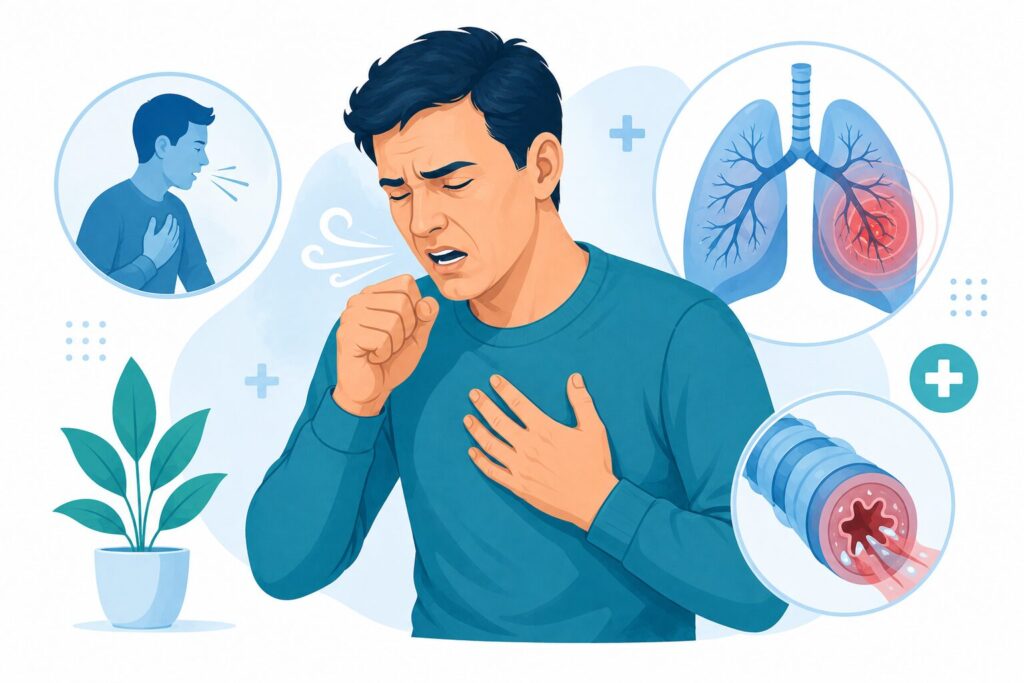
- A persistent cough that lasts longer than three weeks.
- Shortness of breath.
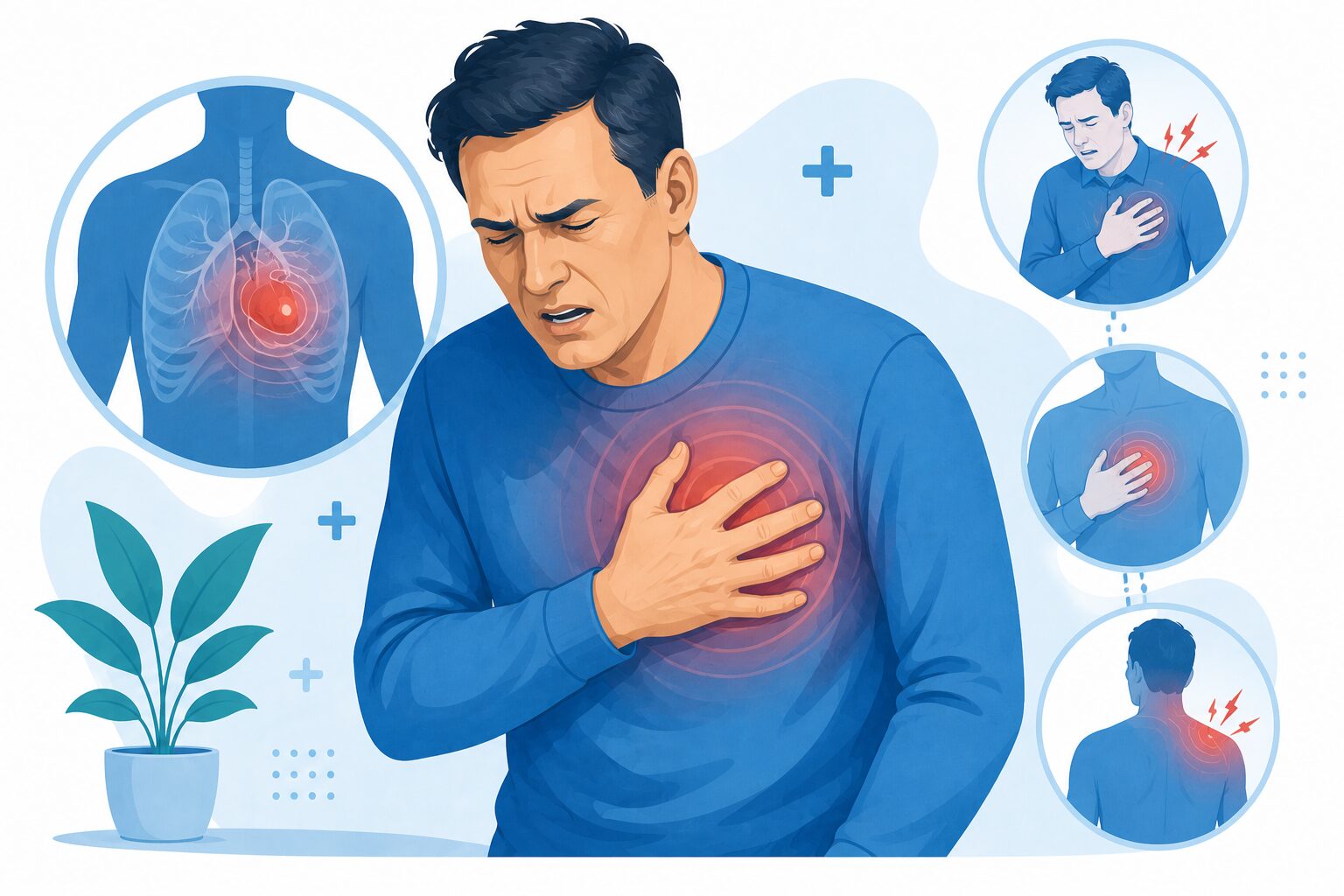
- Chest pain.
- Wheezing.
- Hoarseness or persistent changes in the voice.
- Recurrent chest infections, including bronchitis or pneumonia.
- Unexplained weight loss.
- Persistent fatigue.
- Coughing up blood (hemoptysis).
- Shoulder or back pain.
- Swelling of the face or neck.
- Finger clubbing in some individuals.
Because many non-smokers believe they are unlikely to develop lung cancer, they may delay seeking medical advice. Any persistent, worsening, or unexplained respiratory symptoms should be evaluated by a healthcare professional, particularly if they are accompanied by weight loss, fatigue, or coughing up blood. [7]
Who Is Most at Risk?
Although smoking remains the most significant risk factor for lung cancer, several groups of non-smokers may also have an increased risk of developing the disease.
Higher-risk groups include individuals who:
- Are over the age of 50.
- Have prolonged exposure to secondhand smoke.
- Have a family history of lung cancer.
- Have been exposed to radon gas.
- Work in occupations involving asbestos, silica, diesel exhaust, or other industrial carcinogens.
- Live in areas with consistently poor air quality.
- Previously received radiation therapy to the chest.
- Have chronic lung diseases such as COPD or pulmonary fibrosis.
- Have inherited or acquired genetic mutations associated with lung cancer.
Understanding personal risk factors allows individuals and healthcare professionals to make informed decisions about monitoring symptoms and considering appropriate screening when indicated. [4,11]
How Is Lung Cancer Diagnosed?
If lung cancer is suspected, healthcare professionals use a combination of clinical assessment, imaging studies, and laboratory testing to establish a diagnosis.
Medical History and Physical Examination
The evaluation begins with a review of symptoms, smoking history, occupational exposures, environmental risk factors, family history, and previous medical conditions. A physical examination may also identify signs that warrant further investigation.
Imaging Tests
Imaging studies help identify abnormalities within the lungs and determine whether additional testing is required. Common imaging methods include:
- Chest X-ray.
- Computed Tomography (CT) scan.
- Low-Dose CT (LDCT) scan for eligible high-risk individuals.
- Positron Emission Tomography (PET) scan when appropriate.
Laboratory Testing and Biopsy
If imaging identifies a suspicious lung lesion, doctors may recommend obtaining a tissue sample through a biopsy. The sample is examined under a microscope to confirm whether cancer is present.
Additional laboratory testing, including molecular and genetic analysis, may also be performed to identify specific genetic mutations that can guide targeted treatment decisions. [4]
Can Lung Cancer Be Prevented?
Although not every case of lung cancer can be prevented, reducing exposure to known risk factors may help lower the overall risk of developing the disease. Prevention strategies focus on minimizing exposure to carcinogens, maintaining lung health, and identifying individuals who may benefit from early screening.
Practical steps that may help reduce risk include:
- Avoid exposure to secondhand smoke whenever possible.
- Test homes for radon where recommended.
- Follow workplace safety regulations and use appropriate protective equipment when working around asbestos, silica, diesel exhaust, or other hazardous substances.
- Maintain good indoor air quality and adequate ventilation.
- Exercise regularly to support overall respiratory and cardiovascular health.
- Eat a balanced diet rich in fruits, vegetables, whole grains, and other nutrient-rich foods.
- Attend regular health checkups and discuss personal risk factors with a healthcare professional.
Although these measures cannot eliminate the risk entirely, they may contribute to better overall lung health and reduce exposure to preventable risk factors. [8]
The Importance of Early Detection
One of the greatest challenges in managing lung cancer is that symptoms often do not appear until the disease has reached an advanced stage. This is especially true for many people who have never smoked, as lung cancer may not initially be considered when symptoms first develop.
Early detection can significantly improve treatment outcomes. When lung cancer is diagnosed before it has spread beyond the lungs, patients generally have access to more treatment options, including surgery, targeted therapy, radiation therapy, and other potentially curative treatments.
According to the National Cancer Institute (NCI) Surveillance, Epidemiology, and End Results (SEER) Program, the 5-year relative survival rate is approximately 65.5% when lung cancer is diagnosed while still localized, compared with 38.3% for regional disease and 9.5% after distant metastasis. These statistics demonstrate the value of early diagnosis and timely medical evaluation. [6]
Individuals at increased risk, particularly adults aged 50 years or older with a significant smoking history or other established risk factors, should discuss lung cancer screening with their healthcare provider. Annual Low-Dose Computed Tomography (LDCT) screening may be recommended for eligible individuals according to current clinical guidelines. [5]
Lung Health Awareness in the UAE
The United Arab Emirates has placed increasing emphasis on preventive healthcare, cancer awareness, and early diagnosis through national public health initiatives. While smoking remains an important risk factor for lung cancer, awareness is also growing regarding lung cancer among individuals who have never smoked.
Residents throughout the UAE may be exposed to factors that can influence long-term lung health, including:
- Urban air pollution.
- Occupational exposure to dust, chemicals, or industrial pollutants.
- Secondhand smoke.
- Family history of lung cancer.
- Chronic respiratory diseases.
Understanding personal risk factors and recognizing persistent respiratory symptoms can help individuals seek timely medical evaluation. Preventive healthcare, regular medical checkups, and appropriate screening for eligible high-risk individuals remain important components of maintaining long-term respiratory health.
People living in Dubai, Abu Dhabi, Sharjah, Ajman, Ras Al Khaimah, Fujairah, Umm Al Quwain, and across the UAE can benefit from increased awareness of lung cancer risk factors, regardless of their smoking history. [15]
Conclusion
Lung cancer is often considered a disease that affects only smokers, but this misconception can delay diagnosis and reduce awareness among people who have never smoked. A substantial number of lung cancer cases occur in never-smokers, with environmental exposures, occupational hazards, inherited genetic factors, previous radiation therapy, chronic lung diseases, and family history all contributing to risk.
Recognizing persistent symptoms, understanding individual risk factors, and seeking timely medical evaluation are essential steps in supporting early diagnosis. Although not every case of lung cancer can be prevented, reducing exposure to known carcinogens and maintaining good respiratory health may help lower overall risk.
If you experience persistent respiratory symptoms or have concerns about your personal risk, consult a qualified healthcare professional. Early evaluation can identify the underlying cause of symptoms and, if lung cancer is present, may increase the likelihood of diagnosis at a more treatable stage.
For individuals who wish to better understand their lung health, completing a lung health assessment through the Be Lung Aware platform can provide valuable information and support informed discussions with a healthcare provider.
Medical Disclaimer
This article is intended for educational and informational purposes only. It should not be used as a substitute for professional medical advice, diagnosis, or treatment. The information presented is based on guidance from recognized medical organizations and peer-reviewed scientific literature available at the time of publication. Always consult a qualified healthcare professional regarding any symptoms, medical concerns, or decisions related to your health. Never disregard professional medical advice or delay seeking medical attention because of information you have read in this article.
References
[1] Centers for Disease Control and Prevention (CDC). Lung Cancer Among People Who Never Smoked.
https://stacks.cdc.gov/view/cdc/142484/cdc_142484_DS1.pdf
[2] National Cancer Institute (NCI). Lung Cancer in Never Smokers.
https://www.cancer.gov/news-events/cancer-currents-blog/2023/lung-cancer-never-smokers-rising
[3] National Cancer Institute (NCI). Lung Cancer Research.
https://www.cancer.gov/types/lung/research
[4] National Cancer Institute (NCI). Lung Cancer.
https://www.cancer.gov/types/lung
[5] National Cancer Institute (NCI). Lung Cancer Screening (PDQ®).
https://www.cancer.gov/types/lung/patient/lung-screening-pdq
[6] National Cancer Institute (NCI). SEER Cancer Statistics Review.
https://seer.cancer.gov/statfacts/html/lungb.html
[7] American Cancer Society. Signs and Symptoms of Lung Cancer.
https://www.cancer.org/cancer/types/lung-cancer/detection-diagnosis-staging/signs-symptoms.html
[8] American Cancer Society. Cancer Prevention and Early Detection.
https://www.cancer.org/cancer/risk-prevention
[9] American Cancer Society. Radiation Exposure and Cancer Risk.
https://www.cancer.org/cancer/risk-prevention/radiation-exposure.html
[10] Centers for Disease Control and Prevention (CDC). Health Effects of Secondhand Smoke.
https://www.cdc.gov/tobacco/secondhand-smoke/health.html
[11] Centers for Disease Control and Prevention (CDC) – NIOSH. Occupational Cancer.
https://www.cdc.gov/niosh/topics/cancer/
[12] World Health Organization (WHO). Ambient (Outdoor) Air Pollution and Health.
https://www.who.int/news-room/fact-sheets/detail/ambient-(outdoor)-air-quality-and-health
[13] National Health Service (NHS). Lung Cancer Symptoms.
https://www.nhs.uk/conditions/lung-cancer/symptoms/
[14] Islam KM, et al. Lung Cancer Risk Factors and Epidemiology. Contemporary Oncology.
https://pmc.ncbi.nlm.nih.gov/articles/PMC8063897/
[15] UAE Ministry of Health & Prevention. National Health Programs.
https://mohap.gov.ae/